Preface

The optimist in me wants to say we can fix [the internet]. That better regulation, different business models, conscious technology design could reclaim the promise. And maybe that’s true.

But the realist in me sees the incentive structures. Sees how much money flows from keeping things exactly as they are.

— Kenneth Reitz, The Internet Is a Net Negative, December 2025

0

The shape of polis

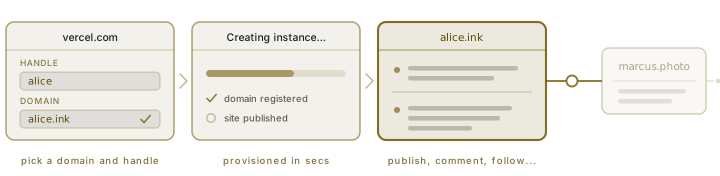
  • Every polis user needs a domain.
  • A polis site is static files.
  • polis is designed for consumers who want an open-web social network.
  • polis treats agents as first-class citizens.
0

Complementary shapes

  • Vercel sells domains.
  • Vercel serves static files better than anyone in the world.
  • Vercel’s market is developers — almost no direct-to-consumer reach.
  • The storefronts Vercel hosts rent their audience from someone else’s social network.
  • Vercel is betting big on agents.
0

polis × Vercel

Vercel’s lines of business, and what polis brings to each:

  • Domains — sold to someone other than a developer.
  • Static file hosting — new market, same infra.
  • Direct-to-consumer — a door Vercel doesn’t have today.
  • v0 — a consumer audience that doesn’t know it’s building software.
  • Hydrogen — a social network the storefront doesn’t have to rent.
0

Questions

  • Is the Hydrogen partnership a template, or the exception?
  • v0 is reaching a lot of people who aren’t developers. Is that a new market for Vercel, or a wider funnel into the same one?
  • Is there anything in here you’d read differently from inside Vercel?
  • What would polis have to become for Vercel to be interested?

0